Sleeping Away From Home: Carry Your Routine With You
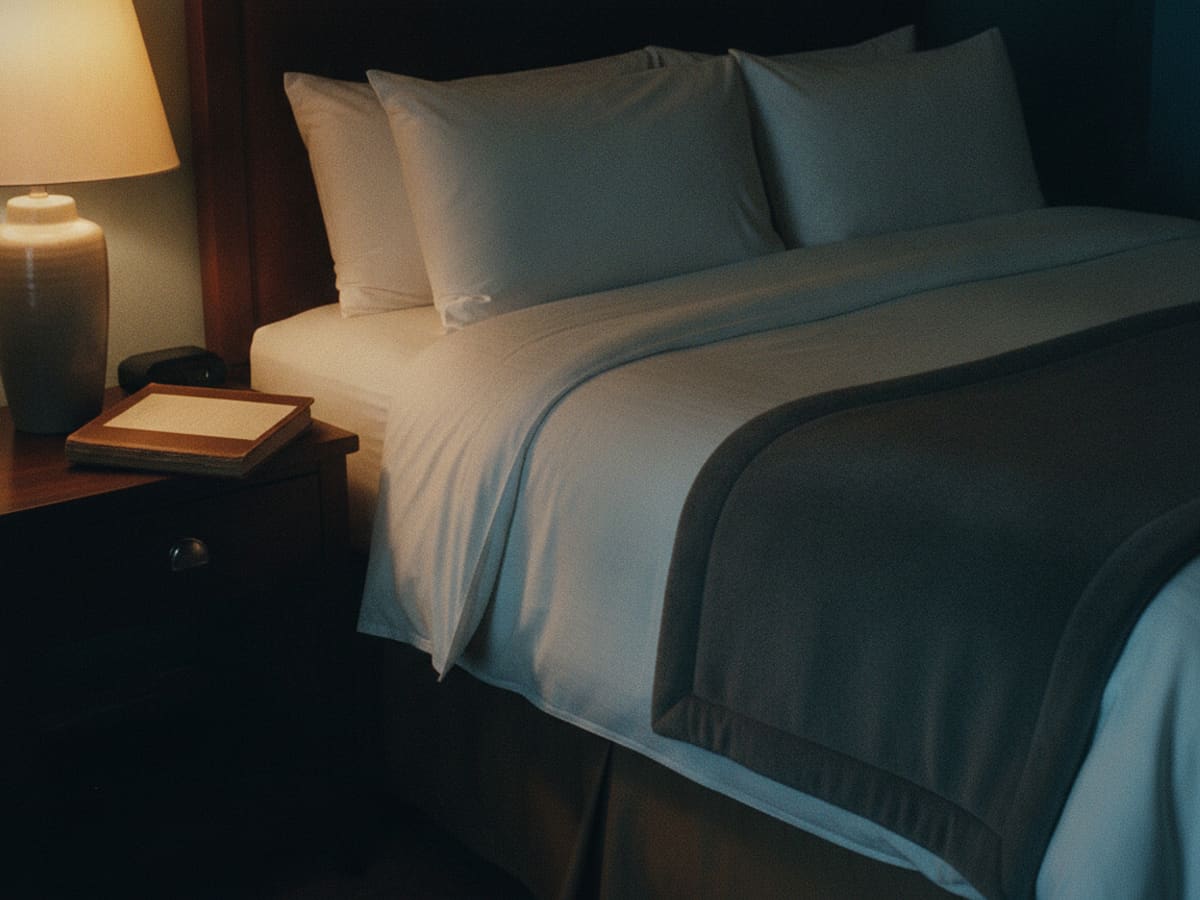
Hotels, guest rooms and travel days can throw off your sleep. This Guide covers small things you can pack and plan so a new bed feels a little more familiar.
Why unfamiliar rooms feel different
If you sleep worse in hotels, guest rooms and rentals, you're in good company. Part of your brain stays a little alert in a new place, a leftover instinct that likes to know what's around you before it fully switches off. That's why a hallway noise you'd never notice at home can wake you at 2 a.m.
The room itself matters too. The mattress feels different, the air smells different, and the light comes in from odd angles. Travel also tends to shake up everything around sleep: meal times, caffeine, a drink or two with dinner, a late night on your phone, or just excitement about the trip.
Many people find the first night somewhere new is the lightest and the next one a bit easier. Knowing that can take some of the pressure off.
Packing the parts of your routine that travel well
Your routine is mostly a chain of cues that tell your body the day is winding down. Many of those cues fit in a bag. Think about what you do in the last hour before bed at home, and bring whatever you can.
- Your own pillowcase, which carries a familiar feel and smell
- Sleepwear you actually like, not whatever was clean
- A paperback or e-reader for the same wind-down reading you do at home
- Earplugs and a comfortable eye mask
- A small night light or a phone flashlight for the bathroom trip
Then repeat the order of your evening, not just the items. If you usually wash up, put on pajamas, read for a while and turn off the lamp, do exactly that. The sequence matters more than any single object.
Adjusting light, noise and temperature
Take a few minutes when you arrive to set up the room, before you're tired and cranky. Here's a simple order to follow:
- Close the curtains fully. If there's a gap, hold it shut with a clip or a clothespin.
- Cover small glowing lights, like chargers and alarm clocks, with a piece of clothing or turn them to face the wall.
- Find the thermostat or window and set the room a little cooler than feels cozy. Many people sleep better in a cooler room with a blanket. Ask for an extra blanket if you need one.
- Block out noise with earplugs, or run a fan or a steady background sound to soften sudden noises.
- Leave a dim path to the bathroom so you don't have to switch on a bright overhead light at night.
Handling time zones and late arrivals
Light is the strongest signal your body clock uses. When you cross time zones, getting daylight at the right times helps you adjust. Go outside in the morning at your destination, and keep lights low in the evening.
For a small shift of an hour or two, simply following local time is usually enough. For a bigger one, expect a few days of feeling off, and plan lighter days at the start if you can.
If you arrive late and wired:
- Keep the wind-down short but familiar: wash up, change, dim the lights.
- Skip a heavy meal or extra coffee at the last minute.
- Put your phone across the room, or at least out of reach of work email.
- If you need a daytime nap on a travel day, keep it short and earlier in the afternoon so it doesn't push bedtime later.
Keeping your regular wake-up time where you can
Bedtime can be hard to control when you're away, but a steady wake-up time is easier to hold on to. It gives your body clock an anchor, even after a short night.
Try to get up near your usual hour, open the curtains right away and get outside for a bit. Eat breakfast at